
Guide · 5 August 2026 · 2 min read
How Strong Is a Walk-On Roof Light?
The question everyone asks before standing on glass. What makes structural glazing structural, and what a walk-on unit is — and is not — designed to carry.
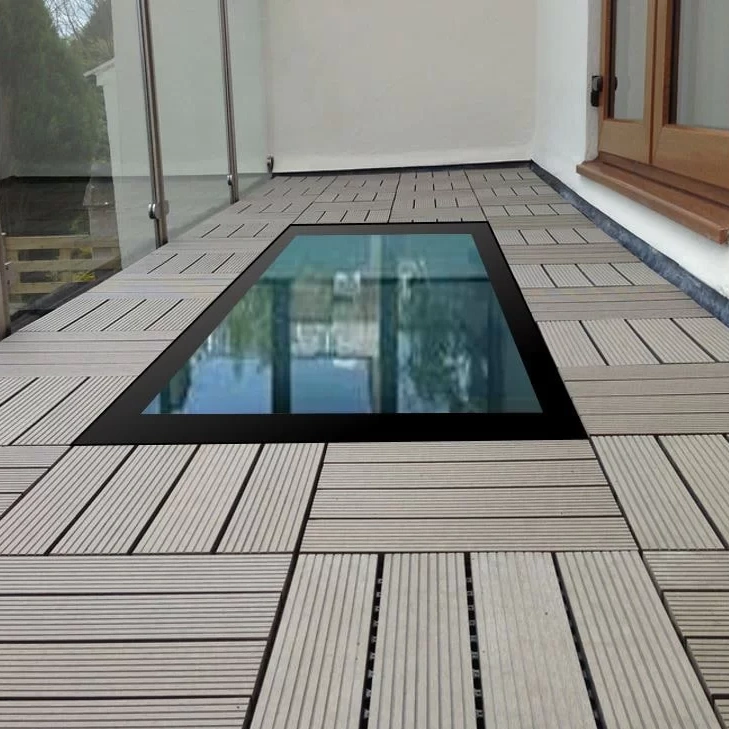
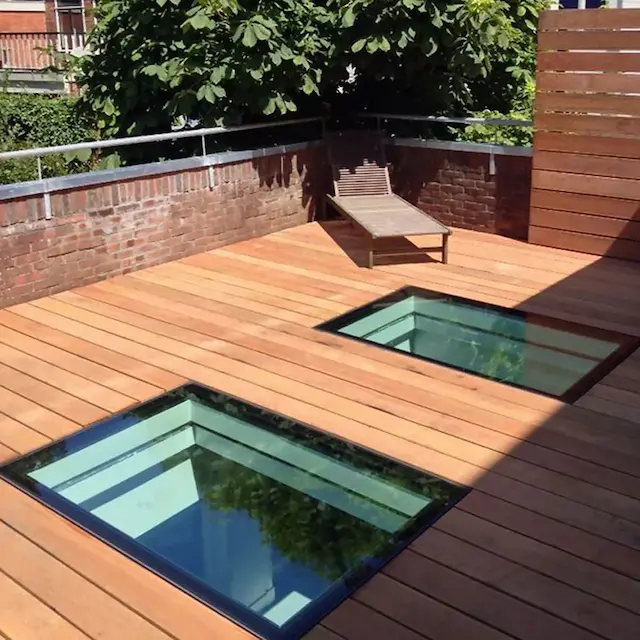
Everyone hesitates the first time they step onto a glass floor. It feels like it should not work — which is exactly why it is worth understanding how a walk-on roof light is built, because the engineering answer is reassuringly unexciting: the glass is specified as a floor, with the same seriousness a structural engineer brings to joists.
Toughened, then laminated — belt and braces
The top pane of a walk-on roof light is built from toughened glass — several times stronger than ordinary annealed glass — laminated together with a structural interlayer. Toughening provides the strength to carry people; lamination provides the safety net, bonding the plies so that even in the extreme case of a breakage the pane holds together rather than falling through. Underneath, the insulating build-up brings the thermal performance a habitable room below needs.
Designed for the loads floors carry
Structural glass is specified against the same loading logic as any floor: the weight of people, distributed and concentrated, with the deflection kept within limits so the glass feels solid underfoot — not springy. That specification depends on the pane size: a larger unit spans further, so the glass build-up thickens accordingly. It is one more reason made-to-measure matters; the specification follows your exact dimensions rather than a one-size guess.
What to tell us at quote stage
- Where it is going — private terrace, patio over a basement, balcony, busy walkway.
- Anything unusual that will sit on it — planters, furniture, a hot tub's neighbour.
- Whether it is on a walking route — if so, specify the anti-slip finish.
The structure under the glass
A walk-on unit hands its loads to the kerb and roof structure beneath, so the supporting deck must be designed for foot traffic too — that part belongs to your builder or structural engineer, and we are happy to talk them through the bearing details before anything is ordered. The glass is only ever as strong as what it stands on.
Both the frameless and framed walk-on units are made to measure in our Liverpool factory, delivered free UK mainland, and covered by the same 20-year guarantee as the rest of the range. Sizes and questions to 03330 902 592 — we would rather answer them before the screed is poured.
Frequently asked questions
Can a walk-on roof light break if someone jumps on it?
The units are engineered for pedestrian loads with generous safety margins, and the laminated construction means that even a broken pane holds together rather than falling through. Normal use — including enthusiastic children — is what they are designed for.
Is walk-on glass scratch-proof?
It is glass, so hard grit underfoot can mark it over time, as with any glass floor. The anti-slip finish disguises fine wear; avoid dragging planters or furniture across it.
What is the difference between walk-on and a normal roof light?
A standard roof light is designed for weather and maintenance access only. A walk-on unit has a structural toughened, laminated top pane and a build-up specified for regular foot traffic — it is a floor that happens to be glass.
Can walk-on units be bespoke sizes?
Yes — like everything we make, walk-on roof lights are manufactured to your exact millimetre dimensions, with the glass build-up specified for that size.
Featured in this article
Shop the products
Made in Britain
Roof lights made to your exact size
Every Vant Glass roof light is manufactured to order in Liverpool, with a 20-year guarantee and free UK mainland delivery. Get an instant price or talk to the team on 03330 902 592.